Millicent Stephenson is leaving Spotify
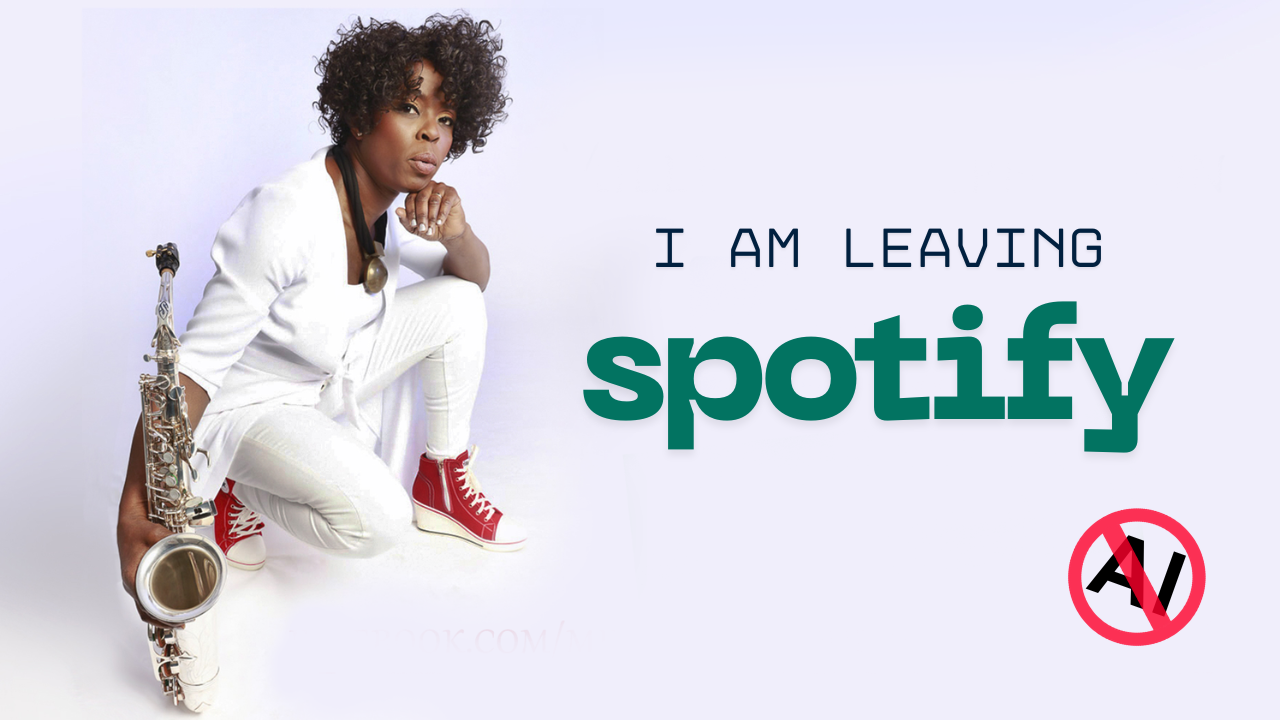
This is a reproduction of the statement posted on Millicent's main website on 20.12.25.
Whilst I am mainly a gigging musician, I have also written and produced music during my career. I have distributed my album Reflective Notes and my single Take Me To The King as physical copies, through the radio, and, as many other musicians, through streamings services, including Spotify.
As one of the largest providers of music streaming services in the world, Spotify was, for many years, the platform every musician wanted to grow in. Their reach is still enormous, yet there are several factors that have pushed me towards the decision of removing my music from it.
The main concern I have is the lack of regulation over music generated with artificial intelligence. In the last year, journalists and even casual listeners have uncovered that multiple “artists” verified by Spotify are not in fact human, but the result of using generative AI platforms like Suno or Udio. Said “artists” are boosted by the Spotify algorithm and recommended to new users every day. On top of that, their artificial nature allows them to quickly pollute the platform with many more tracks than a human musician would reasonably be able to produce in the same amount of time. This is done with the intention to exploit Spotify’s royalties system, which is designed to reward frequent uploads and constant engagement.
In case you don’t know, Spotify does not pay royalties for tracks that are played less than 1000 times per year, for at least 30 seconds each time. When that threshold is surpassed, the payment still does not go to the artist who wrote the song, but to their distribution service or their record label, if they have one. An estimation by Tony van Veen from Disc Makers revealed that, due to this system, up to 86% of the songs available on Spotify didn’t generate any revenue for their creators in 2024. Considering this, it becomes clear why self-publishing a high volume of AI generated tracks would be attractive for some people.
The proliferation of artificially generated music is detrimental to real musicians. The platforms used to generate this content are trained with music created by humans, without permission, credit, or remuneration. Then, they flood Spotify and divert streaming time away from real artists. To add insult to injury, the profit Spotify gets from their business has reportedly gone to finance projects involving the development of AI technology in areas unrelated to music.
For all of this, I can no longer have my original work on Spotify. In the following weeks, I will remove my albums, singles and podcast from their service. If, after that, you see any content labelled as mine on Spotify, please know that I do not approve of it. To listen to my music and support what I do, you can subscribe to my YouTube channel, or look for me in other streaming services like Deezer, Apple Music, etc.
You can learn more about the impact of generative AI in the music industry and what organisations like the Musicians’ Union are doing about it here.
If you want to discuss this topic further, you can contact Millicent here.