The Tunegirl shows us all that age is just a number

Electronic music is young, and techno, even younger. So much, in fact, that Andrea Gill, known professionally as The Tunegirl, was born before it, in the 60s, at what was West Germany back then.
Techno first appeared in Detroit, USA, during the 80s, when Andrea was already a young adult. It is a genre that focuses on rhythm and the use of sound synthesis to develop new timbres, which means that it is heavily reliant on sound technology. Electronic instruments, digital audio workstations, software emulators and synthesizers are what allow techno artists to build their music across long periods of time —sets, rather than songs.
Andrea was captivated by the genre and its possibilities. She spent that decade and the next exploring minimal techno and working as a DJ. Then, she had a long pause, during which sound technology developed at great speeds and changed the field for electronic musicians. By the time she came back, the use of music software was so widespread that it looked inescap...
Get a 14 days free trial by signing up to Time For My Music today
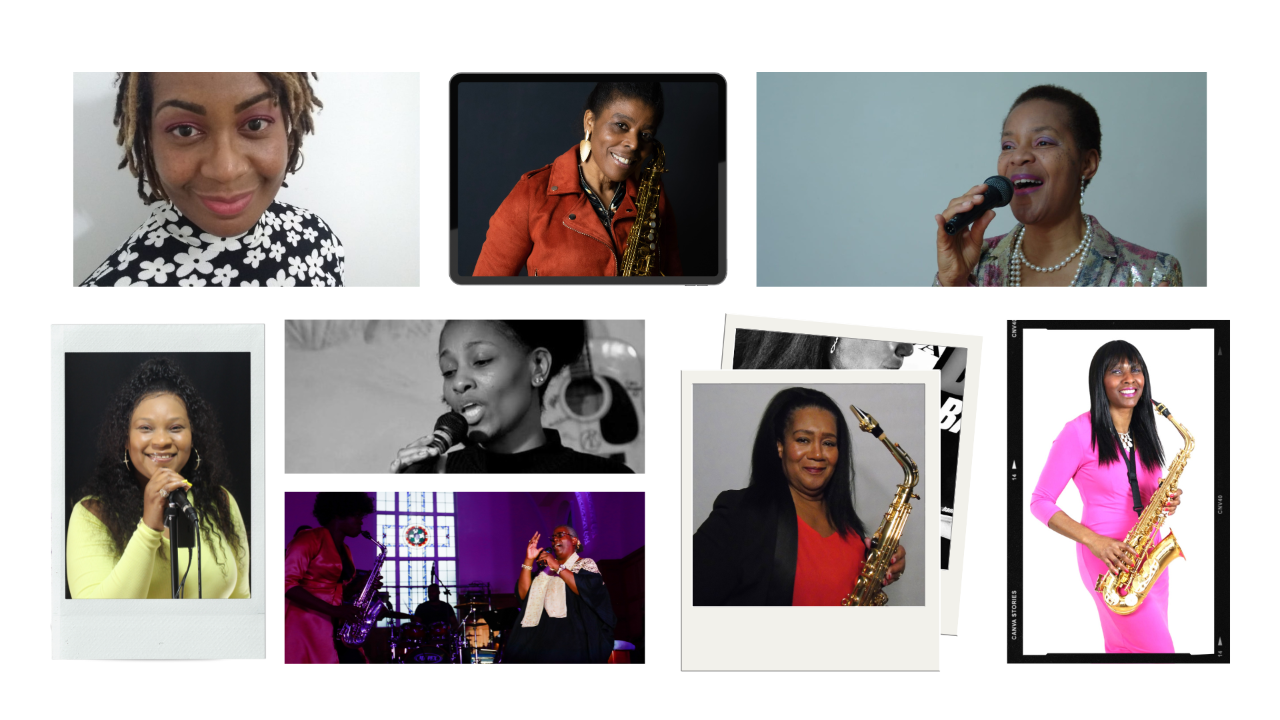
There is still time to join Time For My Music, our online community group to help and guide emerging female musicians in their path to achieve their music dreams. Sign up to work together with like-minded women like Joannie, to whom you can listen in the video below, talking about how she gained confidence and improved several of her skills thanks to the support of the group:
View this post on Instagram
Just like her, upon entering, you will become part of a network, engage with projects and participate in talks and social events aimed at getting you closer to your goals.
If you sign up before tomorrow night, when enrollment closes, you will get a 14 days free trial during which you will be able to:
- Explore our extensive library, including the recent series of workshops we have held about amplifiers and mixers.
- Get acquainted with the other members and talk in our forums.
- Attend one drink, c ...
Amplifying your sound - Setting up and down
We have already covered the basics of health and safety, and also what amplifiers and mixers are. Now, to round up this first batch of summaries, we will go over how to set them up and down properly.
Recap on risk management
Before setting up, check for potential hazards: uneven surfaces, proximity to transit areas, and whether there is a chance your equipment will get wet (by being outdoors or close to where drinks are being served).
Tape your leads to the floor in order to prevent accidents. You can also tape them to the sides of poles or tripods, and if it's important that people see them, you can wrap them in colourful or reflective tape.
Set up your equipment within your reach, but not so close that you could hit it by accident while you perform. If you have poles, extend the legs as wide as the space allows it, and don't make the pole higher than yourself.
During soundcheck, make sure that there is no risk of interference between your devices, and that you have enough spa...
Amplifying your sound - Amplifiers and Mixers
In the first post of this series, we talked about health and safety. Now that we know the necessary precautions we have to take, we can talk about the main devices we are dealing with: amplifiers and mixers.
1. What is an amplifier?
Amplifiers are not unique to music. In fact, they can be found in most, if not all, electronic equipment. Their basic function is to increase the magnitude of a signal, which is itself defined as a current that varies through time. Microphones, electric instruments and digital devices feed signals to audio amplifiers and mixers, which then amplify (i.e. increase loudness)them to make them come out of speakers with the volume and characteristics that we want.
The main difference between an amplifier and a mixer is the number of signals that each of them can handle. The amplifier is designed for only one, while the mixer can process multiple signals at the same time. Due to this, amplifiers tend to have a built-in speaker, while mixers don't.
2. Ba...
Amplifying your sound - Intro
This year at the Time For My Music community group, there have been a series of workshops about amplifying devices, what they do, and how to use them. The goal is to get the women more comfortable with the tech elements involved in their performance.
Why is this important? Well, many times, clients require musicians to bring and set their own public address (PA) system, as there are no professionals who can assist them at the venue. Even when there is a sound engineer or a DJ present, to have the understanding and vocabulary to talk to them empowers musicians and allows them to perform their best.
At the beginning of this series of workshops, many of the Time For My Music members were limited by their lack of knowledge about this topic. Now, they know what to do or ask for in order to get the sound that they want. Some of them have said that they have improved the quality of the sound set by someone else at the venue. It has been great!
To further spread this useful knowledge, we a...