Amplifying your sound - Setting up and down
We have already covered the basics of health and safety, and also what amplifiers and mixers are. Now, to round up this first batch of summaries, we will go over how to set them up and down properly.
Recap on risk management
Before setting up, check for potential hazards: uneven surfaces, proximity to transit areas, and whether there is a chance your equipment will get wet (by being outdoors or close to where drinks are being served).
Tape your leads to the floor in order to prevent accidents. You can also tape them to the sides of poles or tripods, and if it's important that people see them, you can wrap them in colourful or reflective tape.
Set up your equipment within your reach, but not so close that you could hit it by accident while you perform. If you have poles, extend the legs as wide as the space allows it, and don't make the pole higher than yourself.
During soundcheck, make sure that there is no risk of interference between your devices, and that you have enough spa...
Listen again to S3, E1 of the podcast Success Beyond The Score

Today, we start revisiting the third, and for now last, season of the podcast Success Beyond The Score. For it, Millicent changed formats once again, deciding to explore the world of livestreaming.
The biggest advantage of recording the episodes live with an audience was the interaction. As you will see, she answered questions on the spot, and also reconnected with listeners at later episodes to clarify things. It was a good experience that reflected on her later e-learning opportunities. Speaking of that, you can join the mailing list to learn whenever more of those become available.
Here is the first episode, which outlined the structure of the whole season. It explains the seven stages that every gigging musician goes through during their career:
Here is the audio-only version. As always, you can find it at most podcast streaming platforms. Shares are appreciated!
Amplifying your sound - Amplifiers and Mixers
In the first post of this series, we talked about health and safety. Now that we know the necessary precautions we have to take, we can talk about the main devices we are dealing with: amplifiers and mixers.
1. What is an amplifier?
Amplifiers are not unique to music. In fact, they can be found in most, if not all, electronic equipment. Their basic function is to increase the magnitude of a signal, which is itself defined as a current that varies through time. Microphones, electric instruments and digital devices feed signals to audio amplifiers and mixers, which then amplify (i.e. increase loudness)them to make them come out of speakers with the volume and characteristics that we want.
The main difference between an amplifier and a mixer is the number of signals that each of them can handle. The amplifier is designed for only one, while the mixer can process multiple signals at the same time. Due to this, amplifiers tend to have a built-in speaker, while mixers don't.
2. Ba...
Amplifying your sound - Health and Safety
Here is the first of seven posts in our series about amplifying devices, what they do, and how to use them. They are summaries of workshops that took place in the Time For My Music community group. You can learn more about the context in our intro post.
We are starting at the most basic, yet most important aspect of this and any type of work: safety!
1. Take care of your body.
By definition, the performing arts are physically demanding. Music too! You have to look after your health: diet, sleep quality, and fitness level all play a part.
Specifically in regard to amplifying devices, their weight can represent a risk. When deciding on what to buy for your PA system, think about how you are going to transport and set your new device up. Learn the proper form to lift heavy objects; you can do it at the gym or even through online tutorials, like this one.
If you find yourself in a situation where the weight of the equipment is too much for you, don't force yourself. There's no shame i...
Take care of yourself during this high season

It's August. Time for most people to enjoy the summer break, and for gigging musicians to get really busy. Weddings, festivals, celebrations of all kinds fill our schedule to take the best of the free time and the good weather. During this month alone, many musicians get more money than during the entire first half of the year. It's a great opportunity, of course, which can bring feelings of pressure, anxiety and stress.
It's easy to succumb to the hustle and push ourselves to the max, neglecting our health in order to fit more gigs. Doing so is a mistake that can bring consequences in both the short and long term. Remember that most health issues are easier to prevent than to cure!
Taking care of our health can look a bit different from person to person, but in general terms:
- Protect your sleep times and routine.
- Eat enough! Performing demands a lot of energy, this is not the time for diets or calory deficits (unless your doctors deem it absolutely necessary). Prioritize protein ...
Keep yourself safe by planning ahead

June is the beginning of wedding season. To ensure that the event will go as they want, couples book most things, like venue, catering and entertainment, half a year or more in advance. Naturally, that is too early to know exactly what the weather will be like. Last month, I saw how that can become a serious curveball when I found myself on my way to perform at an outdoor wedding during the hottest weekend of the heatwave!
It is in situations like this when proper planning becomes life-saving. First of all, my contract, which we signed all the way back in September 2025, has a clause stating that the client must provide shelter from extreme weather. Although those words mostly make us think of rain, thunder, hail and snow; the increasingly hot summers have showed us how a clear sky with a bright sun can be just as problematic, if not more.
Two weeks before the ceremony, when the forecast said that those days would be well above 30°C, I spoke with the bride to know how that contract...
Legal know-hows for musicians: public liability insurance and portable appliance testing
As in every profession, the work of a musician involves legal and social responsibilities. If you want to build a career as a gigging musician, it is essential that you learn and follow the rules that keep the industry running safely. Don't worry, it isn't hard!
In this fragment of Millicent's free webinar, "Legal Know-Hows For Gigging Musicians", she explains two elements that will help you work safely: public liability insurance, and portable appliance testing.
We hope that this information comes in handy for your current projects. And, speaking of projects, we are working in a new, big resource that will teach you how to get your schedule filled with gigs. As part of the development of this product, we are conducting a survey about how you learn best. It takes two minutes to fill, and your input will allow us to cater to your needs in the most efficient way.
Click here to start the survey
It will be open until Sunday 21st June. Please share!
The best way to learn how to get bookings

Throughout the years, Success Beyond The Score has posted resources for emerging and established musicians in all types of formats. Podcasts, booklets, videos, live webinars, in-person workshops; we have made our portfolio as wide and varied as possible, wishing to offer valuable information in ways that suit all kinds of people.
Now, in preparation for our next big resource, we want to know how you learn best. For that, we have put together a two minutes survey. If you could fill it, and also share it with other emerging and established musicians who could be interested in learning how to fill their schedule with gigs, we will be very thankful.
Click here to start the survey
It will be open until Sunday 21st June. After that date, we will put everything together and give you more information as soon as we can. Please, look forward to it!
What does it take to actually pull a gig off?
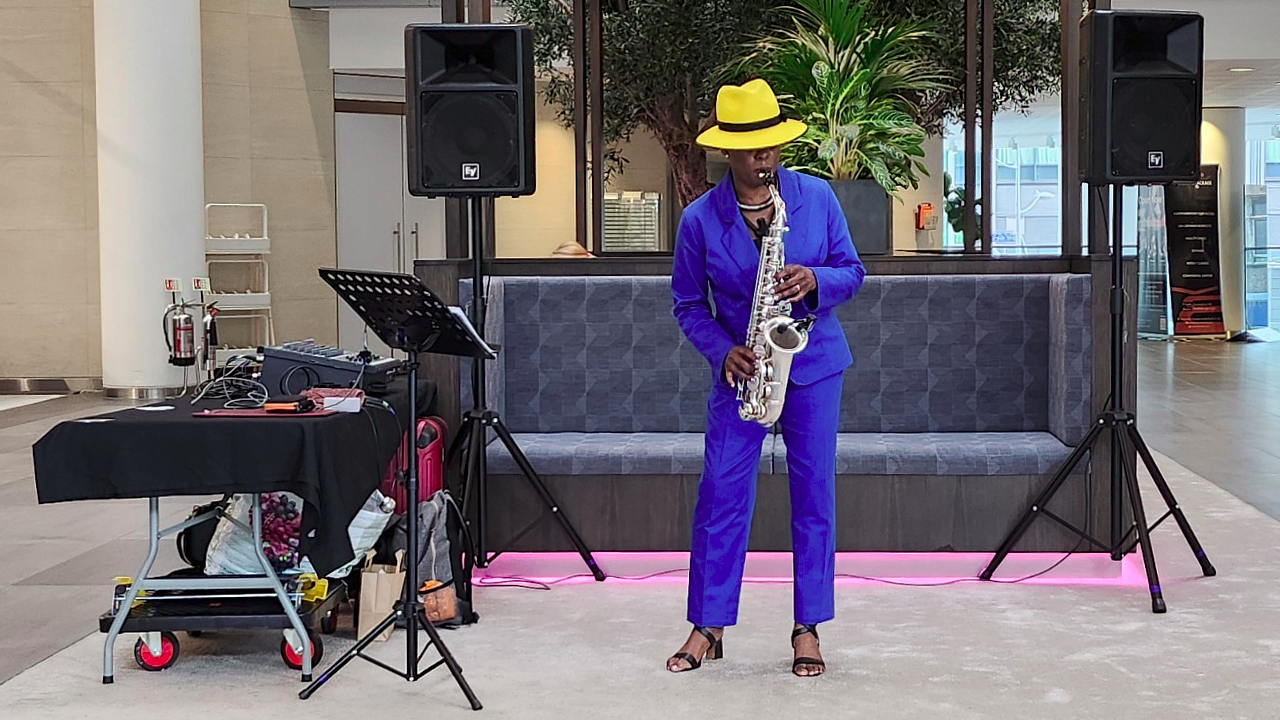
Today, I want to tell you about an experience that one of my sax students lived recently, and what there is to learn from it.
My student posted a video of herself playing that got shared to many people. One person from those she reached liked what they saw, and contacted her to book her for an event. It sounded great, until it was revealed that the gig was in only two weeks.
Panic ensued. She did not know what to do. On one hand, she did not want to pass on the opportunity to play in public, even if for free. On the other, she did not feel ready. After consulting with family members and with myself as her teacher, she decided to go for it, playing a song she already knows well, and one she was working on. She did her best, and while she received no complaints, she ended up feeling overwhelmed and a tad regretful. She told me that she wished she could have an entire year to properly prepare. I can understand, I have been there!
Last minute gigs can open many doors, but they can also ...
Never skip the sound check!
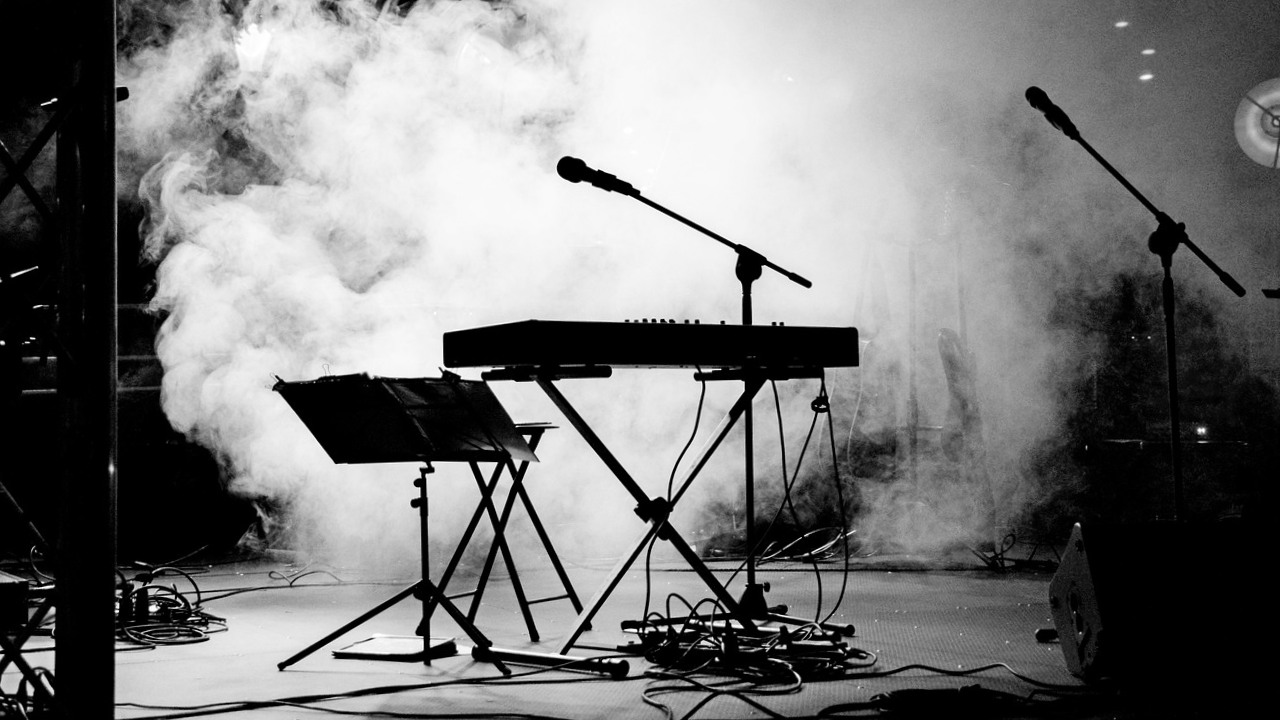
One of the things that I learned in the early stages of my music career is the importance of having a sound check.
In the early stages, I would turn in at the start time of the event with my instrument, put it together while I was in my seat, go on stage when my name was called, and play. This made it so I didn't normally get the sound experience I hoped. Fast forward to today, when I arrive 90 to 60 minutes before the starting time of the performance, depending on whether I’m bringing my own PA. I make sure that my sax mic is working, that my setup is correct and that my tracks work. Then, I walk around the stage in order to identify any zones where the signal of the radio mic may drop or stutter, or where feedback could be generated.
This is how I can guarantee a good sound and therefore a good experience for my audience. To illustrate, here is a little clip of me doing a sound check before playing Kingston Town at an event this summer: